Are multiple-choice quizzes good for learning, or just for testing? What two studies found
By Thomas Lovas Lokoy
Founder & builder of BrainLoop (NorwegianSpark SA). Not an educational psychologist; the findings below are from the two abstracts linked at the end, and my own suggestions are marked as mine.
Last updated: October 2026 · By Thomas Lovas Lokoy, founder & builder of BrainLoop. AI-assisted draft checked against the sources at the end. General information about learning research.
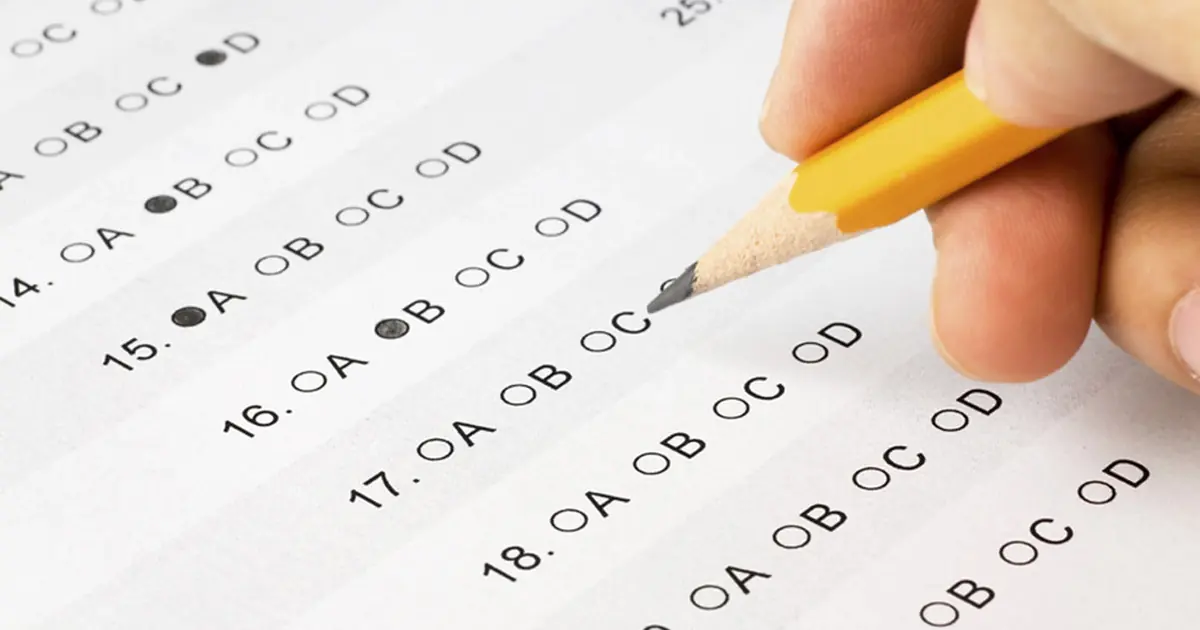
Trivia quizzes are fun, and most of us assume that is all they are. The serious objection to multiple-choice goes like this: picking an answer from four options is recognition, not recall, so it cannot build memory the way producing an answer does, and worse, you might walk away remembering one of the wrong options. Both objections sound right. Both have been tested. The results are more encouraging than the folk wisdom, with one condition attached that most quiz apps ignore.
Objection one: "it's only recognition"
A 2012 paper in Psychological Science by Jeri Little, Elizabeth Bjork, Robert Bjork and Genna Angello took the recognition objection head-on. Its title gives away the verdict: "Multiple-choice tests exonerated, at least of some charges". The argument the authors set out to test was that multiple-choice engages recognition rather than the productive retrieval that improves later recall. Their question: can a multiple-choice test with plausible alternatives trigger the same productive retrieval?1
Across two experiments, it could. The authors conclude that "properly constructed multiple-choice tests can indeed trigger productive retrieval processes".1 More surprisingly, the multiple-choice format had an advantage over a plain fill-in-the-blank test. Both formats helped people remember the information they were tested on. But only the multiple-choice tests also improved later recall of information related to the incorrect alternatives, presumably because, to reject a plausible wrong option, you have to think about why it is wrong.1
Read that carefully, because it rewrites the objection. A lazy multiple-choice question, where three options are obviously silly, is recognition and teaches little. A good one, where the wrong options are things you could believe, forces you to retrieve what you know about each option to eliminate it. The quality of the distractors decides whether the quiz is a test of memory or an exercise for it.
Objection two: "I'll remember the wrong answers"
This one is real, and it has a name in the literature: the negative effect of multiple-choice testing, where exposure to a plausible lure leads people to produce it later as if it were true. Andrew Butler and Henry Roediger's 2008 study in Memory & Cognition set out to find whether feedback could keep the benefit of multiple-choice while removing the harm.2
Participants studied passages and then took a multiple-choice test under three conditions: immediate feedback, delayed feedback, or no feedback. On a later recall test, both feedback conditions produced more correct answers and fewer intrusions, meaning fewer wrong options from the quiz leaking into people's later answers, than the no-feedback condition.2 The authors' recommendation is one sentence long: "Educators should provide feedback when using multiple-choice tests."2
So the fear of learning the wrong answer is justified, specifically when nobody tells you which answer was right. Show the correct answer after each question and the risk drops while the benefit stays. Timing mattered less than the presence of feedback; both immediate and delayed worked.
The condition most quiz apps ignore
Put the two studies together and you get a short specification for a quiz that teaches rather than merely measures:
- Plausible wrong options. Distractors you could believe, so eliminating them is work.
- Feedback on every question. The correct answer shown, so no lure survives.
A quiz that ticks both is retrieval practice in a friendlier wrapper. A quiz that ticks neither is a guessing game that may leave you slightly worse informed than before you started.
Where BrainLoop Trivia sits against that specification
I would rather be exact than flattering.
Feedback: yes, immediately. In the Trivia app you pick one of four options and the result is shown at once: the correct option turns mint, your wrong pick (if it was wrong) turns red, and the others fade. The next question follows after about a second. That is the Butler and Roediger condition met on every question, which is the single most important thing a quiz can do.
Distractors: mixed, honestly. The eight built-in questions are general-knowledge ones, and the wrong options are mostly the sort of thing people do believe (the capital-city and planets questions are classic traps). Some are easier to eliminate than others. It is a warm-up set, not a curriculum.
Scope: small and fixed. Eight questions, the same eight each time, with a score out of eight and a Play Again button. It runs entirely in your browser with no AI involved and no record kept between visits. Play it twice and you will know the answers; at that point it has done what a fixed set can do.
If you want multiple-choice practice on a topic of your own, the research says the format can work, but the app for that in BrainLoop today is Flashcards, which generates question-and-answer cards on any topic and makes you produce the answer before revealing it. That is cued recall rather than multiple-choice, and Little and colleagues found both formats help retention of what is tested.
How to use quizzes so they teach (my opinion)
- Explain your rejections. When you eliminate an option, say to yourself why it is wrong. That is the mechanism the 2012 study points to; a quiz only trains what you think about.
- Never skip the reveal. If a quiz lets you move on without showing the answer, stop using it for learning. The 2008 study is unambiguous about feedback.
- Return to what you missed. The question you got wrong, plus the correct answer you were shown, is the pair worth revisiting tomorrow. Turn it into a flashcard.
- Write your own distractors. If you make quizzes for others, the effort goes into the wrong options. Three believable alternatives is the whole craft.
The short version
Well-built multiple-choice quizzes are not just recognition: plausible wrong options make you retrieve what you know to rule them out, and that retrieval improves later recall, including of the related facts. The one real danger, remembering a wrong option, is largely removed by showing the correct answer after each question. BrainLoop's Trivia does the feedback part on every question and is honest about being a small fixed set. For your own material, generate flashcards and produce the answer yourself.
Sources
Footnotes
-
Little, J. L., Bjork, E. L., Bjork, R. A., & Angello, G. (2012). Multiple-choice tests exonerated, at least of some charges: fostering test-induced learning and avoiding test-induced forgetting. Psychological Science. Abstract via Europe PMC: https://europepmc.org/article/MED/23034566 ↩ ↩2 ↩3
-
Butler, A. C., & Roediger, H. L. (2008). Feedback enhances the positive effects and reduces the negative effects of multiple-choice testing. Memory & Cognition. Abstract via Europe PMC: https://europepmc.org/article/MED/18491500 ↩ ↩2 ↩3